"Managing Diversity: Three Decades of Building a Cohesive Nasarawa State: Issues, Challenges and Prospects.
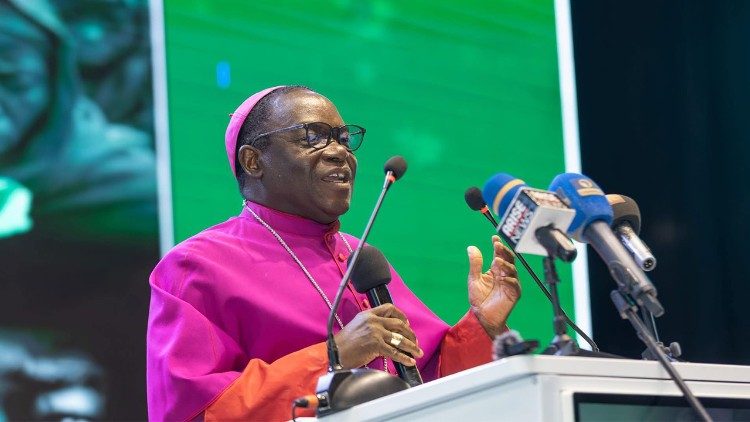
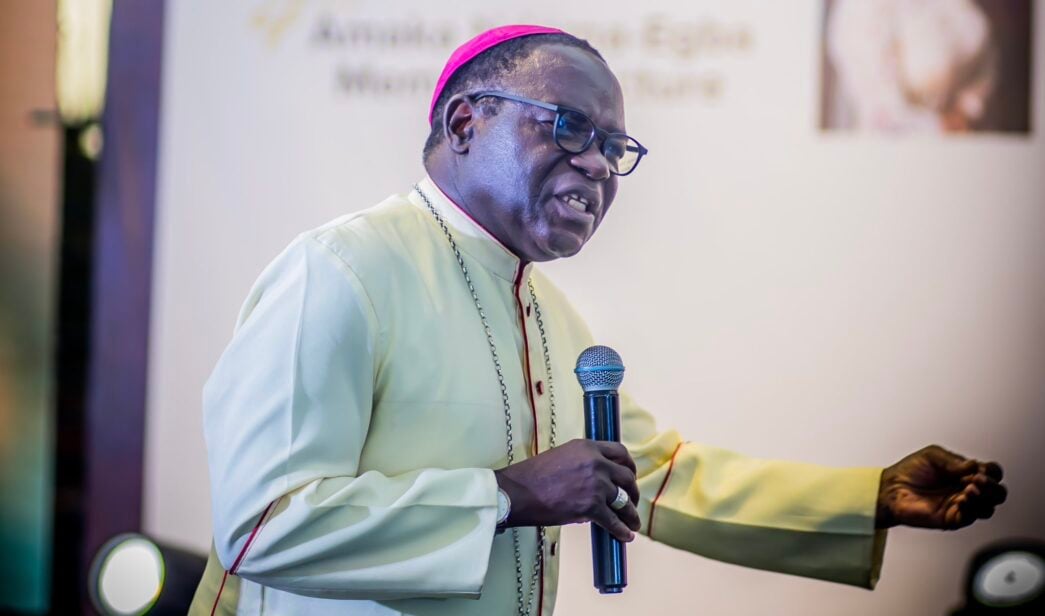
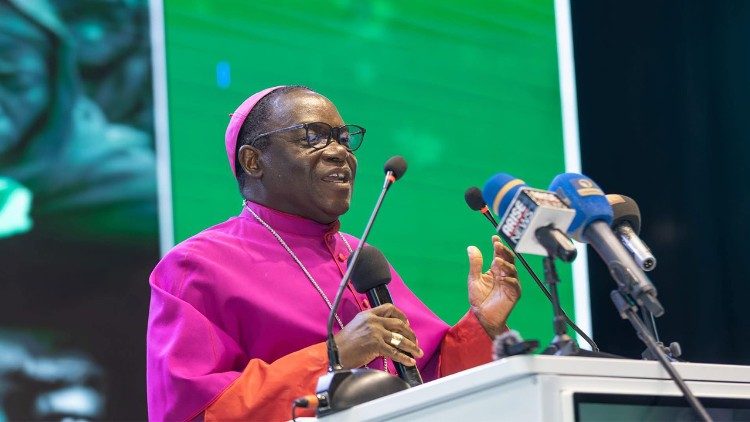
Text of a Lecture Delivered on the Occasion of the 30th Anniversary of the Creation of Nasarawa State at the State House Auditorium, Lafia on September 30th, 2026, by Bishop Matthew Hassan KUKAH, CON.
Bishop Matthew Hassan KUKAH
When I received a call from my brother and friend, Labaran Magaji, SAN, Secretary to the government of Nasarawa State, inviting me to this event, I was delighted but humbled. On second thoughts, though, I felt that perhaps, I actually deserved an invitation to participate in the celebrations. I believe that I have earned the right to be called a citizen of Nasarawa State. In doing this, I expect to be exempted from taxation but entitled to whatever benefits come to the elderly like us. Prior to the creation of this state, I already had memories of friends and places I had come to know such as Akwanga, Lafia and Wamba. I remember my good friend, Fr. Sylvester Nagba of blessed memory, the first Eggon priest and late Fr. Peter Egga who had been a year behind me at St. Augustine’s Seminary Jos as the second. We share the same alma mater with the first Bishop of the Catholic Diocese of Lafia, now Archbishop of Jos, His Grace, Archbishop Matthew Ishaya Audu and now his successor, David Ajang, whose ordinations I attended here in Lafia. His Excellency your Governor regaled us with stories of his graduating from a Catholic school here in the state getting a free lunch from the local Priest who was meeting a Muslim for the first time! To impress the priest, he had offered to say the Our Father! I have also had the honour of meeting and relating with some of your Governors and their Deputies over the years. Senator Abdullahim Adamu, your first civilian Governor since the fourth republic, Senator Umaru Tanko Al-makura are more than just my acquaintances. I did not have the honour of meeting their other predecessors but I met Alhaji Aliyu Doma of blessed memory briefly in Abuja. I am grateful to Senator Al-makura who, as Governor, sought me out and requested that I serve as Pro Chancellor and Chairman of Council of the Nasarawa State University. Your current Governor, His Excellency, Engr. Abdullahi Sule and I have had a good relationship. Other Deputies to Governors such as; Professor Onje Gye Wado, Honourable Labaran Maku, Samuel Ewuga of blessed memory and now Dr. Emmanuel Akabe. With these credentials, I believe I qualify to represent Nasarawa state as an ambassador to Sokoto or Kaduna state! Your Excellencies, distinguished Ladies and gentlemen, therefore, I am here to join this family celebration and express my solidarity and not just to deliver a lecture. In the light of this, mine should be seen as a conversation not a lecture. You have asked that I speak on, Unity in Diversity: Three Decades of Building a Cohesive Nasarawa State-Issues, Challenges and Prospects. The title is exciting and topical but could be subject of many doctoral theses. The concept of unity in diversity sounds counter intuitive. On the surface, you might say, if it is diverse, then it is it is not united. Notwithstanding, I believe I understand where you want me to go with this topic, namely, how to assemble the disparate parts to make a whole. I will try to first explain how important managing diversity is and then try to see how this fits into the larger goals and objectives of the Nasarawa state government. I am of course not in a position to showcase what the government has done in this regard. This will be done by the various publications that the government has prepared in the course of the various phases of this celebration. I will try to speak to why managing diversity in any society or organization is key to success, stability, growth and survival. A market may contain hundreds of different goods and still remain one market because there are rules, trust and exchange. Diversity is the presence of difference. Cohesion is what enables those differences to live and work together. Managing diversity is fundamental to our existence as individuals, family, community and any society. This determines how we grow, stunt or stagnate, whether we have peace or conflict, whether we are sad or happy. In a manner of speaking, almost everything depends on how we manage differences, whether in the playground, the bureaucracy or in corporate offices. As individuals, how we relate with others determines our happiness or theirs. The decay and chaos in our dear country today suggest that we have made a total mess of the art of managing of diversity. Many Nigerians are familiar with a famous anecdote that has become both an excuse or an affirmation of the state our country today. It was said that two of our founding fathers, the late Dr. Nnamdi Azikiwe had counselled the Sardauna of Sokoto, the late Sir Ahmadu Bello on the need to sink their differences so as to build a great country. The Sardauna was said to have responded: No, rather than forget, let us rather understand our differences! For now, it is not a matter of who among the two was right. Either way, Nigeria’s progress has stagnated, thus, making it almost impossible for us to make the progress we had hoped we would make almost 70 years after independence. It is clear that we either forgot or failed to understand our differences. We are paying the price for a country still unable to find a consensus around the values that should provide the pillars for a united nation. Our differences have become weapons of a war of attrition, evident in the state we are in now. Nigeria has been fumbling, stumbling, almost crumbling to make a headway. I have said severally that we are like Sisyphus in Greek mythology who angered the gods and for his punishment, he was given a stone to roll up a hill. Each time he rolled the stone and came close to the top of the hill, the gods would trip the stone, and it will roll back to the bottom of the hill. He will go and start all over again. And so it went, on, and on, and on. One moment, it seems we have found the talisman by a coup or an election and all of a sudden, it turns into a poison we would rather not swallow, and we all become frustrated all over again. Tomorrow, October 1, we will be marking our 66th independence anniversary. As always, a thoroughly cynical nation and a self-indulgent elite will say that there is nothing to celebrate. The reasons for our frustration are many. However, we still remain grateful to God because nation building is not for one generation. It is a collective exercise of sacrifice, pain, sweat and tears. Years of elite impatience and in most cases, crass indiscipline have seen a nation embark on mission of what Ms, Onyeka Onwenu of blessed memory referred to as; the squandering of riches. The debauchery of the elite has grown exponentially, and this is at the heart of why managing diversity has remained an illusion, a dream that has turned into a nightmare, a collective vision of unity constantly in shifting motion. The building of a great nation was never meant to be a journey to some kind of King Solomon’s Mines where individuals successfully come away with stolen diamonds. In essence, it is supposed to be an exercise in dedicated service of fatherland characterized by sacrifice based on a collective vision of building a common home. Sadly, governance in Nigeria has been an exercise in primitive predation and accumulation. However, the common good has remained a shifting kaleidoscope of conflicting promises, hopes and possibilities and promises made and deferred. The consolation is that so far, the worst has not happened, but the best is still too far away to be postponed without consequences. Therefore, managing diversity is urgent. When the Nigerian constitution opens with the lofty words, "We, the people", it is a national summon like the muezzin’s call to prayer at dawn or the angelus bell at noon. Critics have often said that the idea of we the people is misplaced because Nigerians did not sit down to agree on the contents of a constitution. In my view, this misses the point. No constitution dropped from heaven. In the end, it is what is written not who wrote it. For example, only 55 delegates, all white males, attended the 1787 Constitutional Convention in Philadelphia to draft the American constitution. Out of the 55, 39 signed. James Madison is called the father of the constitution, but it is said that in the end, it was Gouverneur Morris who polished the text and introduced the words, We, the people. Similarly, the timeless text of the Declaration of Independence text is credited to Thomas Jefferson with only four others. So, in point of fact, the validity of a constitution does not rest on number of people who wrote the document or their qualification, religion or race. The United Kingdom has lived without a written constitution, relying only on their 1215 Magna Carta and other Acts of Parliament. What this means is that a constitution like a budget is a declaration of intention. Its legitimacy rests often on circumstances as they unfold, on whether it passes the test of public acceptance by answering their existential questions and ensuring the building of a good society. It is a document often given oxygen by the agitation of its people as new challenges arise. This is why constitutional amendments are an important response to new realities and challenges. In talking of managing diversity, the Nigerian constitution has enough provisions in chapter 2. It is not for nothing that all political parties are enjoined to draw inspiration for their party manifestos from the aspiration and sentiments expressed in, Fundamental Objectives of Directive Principles and State Policy. Here, the constitution says that; all organs are to apply it and all those saddled with duties and responsibilities are to be guided by this provision. It also says that; welfare of citizens shall be the primary purpose of government. Here the constitution does not define citizens based on ethnicity, faith, social status or gender. It further says that national integration shall be actively encouraged whilst discrimination in all forms is prohibited. For this purpose, the constitution further states that it is the duty of the state to provide adequate facilities to encourage free mobility of people. It also encourages inter-marriage among persons of different places of origin, or different religious, ethnic, or linguistic associations or ties to increase harmony. Furthermore, it says that the state shall foster a sense of belonging to the end that loyalty to the nation override sectional loyalties. It is also to ensure that the economic system is not operated in such a manner as to permit the concentration of wealth or the means of production and exchange in hands of few individuals or of a group. Section 14 [ 3 and 4] inserts the federal character principles and quotas so as to ensure broad representation and ensuring a principle of inclusion. As we can see, we have enough provisions in our constitution to ensure that all Nigerians are happy and peaceful. However, as Mahatma Gandhi said: There is enough in the world to satisfy our needs, but there is not enough for all our greed. The challenge before us in Nasarawa is to ask, how have the promises of the constitution been put into practice? We already admit that our state as with Nigeria is richly blessed with resources. Nasarawa prides itself with being a miniature Nigeria with over 30 diverse ethnic groups scattered across 13 LGAs, drawn from other groups outside the state such as the Tiv, Fulani, Jukun, Hausa, Idoma, Ggagyi, and so on. This is in addition to the indigenous peoples of the state such as Eggon, Alago, Mada, Gwandara, Bassa, Afo etc. That description should be taken seriously. Nasarawa can become a useful example of how diversity can be turned into strength. If more than thirty ethnic communities, Muslims and Christians, indigenes and citizens from elsewhere can build a common home here, there will be lessons for the rest of our country. We have the manpower, thanks to our state University which, with the wisdom of your founding fathers was established in 2001. On paper and by every means, no Nigerian should go to bed hungry. However, almost everywhere, poverty has become the heirloom of a majority of the people of Nigeria, and Nasarawa is not left out of this inheritance. The 2022 Multidimensional Poverty Index put the figure for Nasarawa at 60.7%. In simple terms, three out of every five people were multidimensionally poor. That is a sobering measure of the work that remains in spreading opportunity across our communities. Nasarawa state has the advantage of being one of the most strategically placed states in Nigeria. Akwanga is such a strategic town that places Nasarawa state where it can take advantage of its very strategic location. If Nigeria were to be a human being, Nasarawa state would be its heart. Take another look at where you are placed on the map. The road arteries from Akwanga can carry the blood of development to Abuja, to the south of Nigeria, to Plateau and the northeast, and to the north through Kafanchan and Kaduna. A deliberate policy of making both Akwanga and Keffi strategic towns can be a great boost to transform Nasarawa state into a gigantic commercial centre from where you can go in any direction across the entire country. This is a major asset that requires strategic partnership with the contiguous states, federal government and the international business partners. Another area that the state can easily key into is Tourism. With such assets like the Farin ruwa water falls in Wamba where you plan a 20MW hydro-electric power project, Hunki Oxbow lake in Awe, Peperuwa Lake, Doma, the various Fadama ponds scattered around you, 60 small lakes and rivers, the state can easily become a favourite destination for tourism. A comprehensive programme in the areas of real estate, massive investment in solid minerals as is already the case, the presence of such industrial giants as Dangote and so on, the future is very bright. Yet for this to happen, the state has to create a more aggressive drive towards attracting international business especially in areas like Agriculture. A deliberate heavy investment in a combination of rail transportation between Keffi and Abuja alone will help to suck a very significant amount of business and people from Abuja to Nasarawa state. It is conceivable for the state to make seamless connection with the federal capital. The economic benefits are incalculable. I am a priest not a businessman, so, really, what do I know? We have remained at a station called, potential, unable to make progress because we have been retarded by our inability to manage diversity, harness our resources effectively for the good of all citizens. We have succumbed too much to partisanship and so, these diversities of energies remain trapped. The result is endless frustration which has kept our state and other states in the nation on the boil. There is an urgent need to fulfil the objectives of the Nigerian constitution when it speaks of a sense of belonging. Politics as someone has said is the art of managing hatreds. Managing diversity is essential when we speak of justice. We all speak of justice and mistakenly associate it with equality, but in practice, what constitutes justice is often intangible and personal to its victim. Justice is a relief, a feeling of satisfaction or inclusion in an individual that a grievance has been resolved or contained, that some kind of wholeness is returning and they can grow. We speak loosely of equality but equality of what? The late justice Oputa used to say Justice is a three-way street, justice for the victim, the society and even the perpetrator. For the average citizen of Nasarawa today, what constitutes justice or injustice today? Do our people feel victimized, ostracized from the loop of power because of their religion or their tribe? These challenges are real. We must be deliberate in working to attain an inclusive society in Nasarawa state. Inclusion becomes real when opportunity can be seen and touched. A child in Wamba, Doma or Awe will understand belonging more clearly through a scholarship, a good road or a functioning school than through any speech about unity, including this speech. When three out of every five people are living in multidimensional poverty, many talented children will be excluded simply because their parents cannot afford the cost of opportunity. When I served as Pro Chancellor of the State University, the Emir of Keffi was the Chancellor of the University. He and I pushed an idea that we saw as a chance to close the gap in the area of access to educational opportunities. We proposed that by a deliberate policy, each Local Government Area be made to allocate 1 or 2% of its budget to endow scholarships to its children in the university so that there will be an even spread in opportunities for children from all over the state to access science courses whose costs often make it impossible for the poor to afford. We could not achieve this before our tenure ended but it is worth considering. Else, the state will be like a man who is merely feeding one part of his body to the exclusion of other parts. In the end, this individual would end up looking like a monster, not a human being. This is the fate that awaits Nasarawa state or Nigeria if we do not deliberately plan to focus on merit to create a sense of belonging for our people. Has Nasarawa state fulfilled the hopes of its people? Maybe, it is not for me to say. Only the people of Nasarawa state can confirm. Yet, no government can satisfy everyone. However, seek the good of your people. Cite key projects across the state and let every community feel the impact. Do not focus on projects that feed the egos of your people based on tribe or religion. You will only further divide and alienate your people and lead them to jealousy. It will deepen animosity and make others feel that when they come to power, they will correct this injustice by repeating the same mistakes. This is what continues to breed tension and violence among our people. Learn from a state like Lagos which has hardly shifted or changed the infrastructure or template of governance. Exploit the proximity that you enjoy with your senior brothers, Plateau first, then Benue state and the FCT. Resuscitate sports and increase local fraternal rivalries and competition. Imagine Nasarawa United beating any of its senior brothers, Benue or Plateau United in a soccer match! Sports are a great source of unity for our people. Infrastructure unites our people and congratulations on your five mini stadia. At thirty, Nasarawa has moved beyond infancy. The next thirty years will be judged by how widely opportunity is spread, how deeply citizens feel they belong and how well our differences are turned into strength. Finally, without General Abacha, our most vilified late Head of state, there would have been no Bayelsa, Ekiti, Ebonyi, Gombe, Nasarawa and Zamfara. The demand for new states continues and it is to be seen as a consequence of our inability to manage diversity. I congratulate the good people of Nasarawa as you celebrate your 30th anniversary. May God help you to prosper, to create a community after His heart. God bless Nasarawa state, God bless the federal republic of Nigeria. Thank you for your very kind attention."